What the QMSR Changed for Complaint Handling on Your Support Line
The QSR was replaced in February. Complaint records still live in federal regulation; the process moved into ISO 13485. What that means on the phone.
One Voice provides outsourced technical support for medical device manufacturers and DME suppliers whose patients and providers need fast, knowledgeable help using their devices. Our trained teams guide setup and usage, troubleshoot issues, and deliver consistent, accurate communication across every interaction—so your users get resolution and your internal teams stay focused on building and shipping product.
When someone can’t get their device working, the stakes are higher than ordinary tech support—there’s a patient waiting, a treatment on hold, or a clinician who needs an answer now. One Voice staffs that front line with agents trained on your device, your protocols, and your escalation rules, so every call, message, and chat is handled with the competence and care a medical device demands.
Medical device support is two jobs at once: solving a technical problem and reassuring a person who may be anxious, unwell, or responsible for someone who is. Generic tech support handles the first and fails the second. One Voice trains for both.
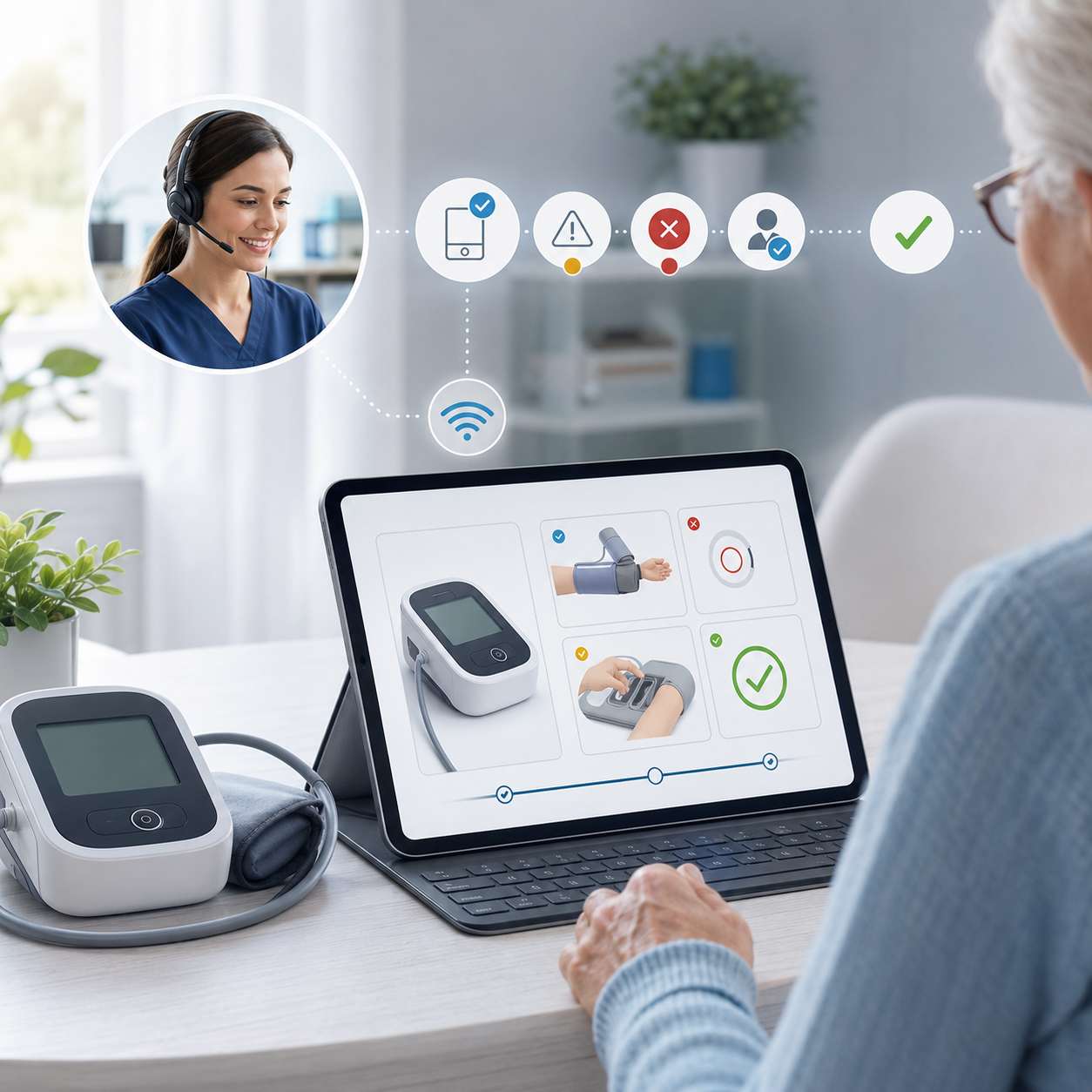
Our agents learn your device inside and out—setup, common issues, error states, and correct usage—and they’re trained to communicate clearly and calmly with patients, caregivers, and clinicians alike. Whether it’s a first-time patient setting up a device at home or a provider integrating it into their workflow, the support feels knowledgeable, patient, and consistent with your brand.
First-time setup, everyday usage questions, troubleshooting, and reassurance—delivered patiently and in plain language, so patients can use their device correctly and confidently at home.
Deployment help, technical troubleshooting, and workflow questions for the clinicians and staff who use your device in care settings—so it fits into their day instead of slowing it down.
Guiding patients and providers through first-time configuration and activation
Clear answers on how to operate the device correctly and safely
Diagnosing and resolving common issues, error states, and connectivity problems
Answering questions on features, accessories, warranties, and replacements
Meeting users on phone, email, chat, or SMS, wherever they reach out
Passing complex technical or clinical issues to the right team quickly and accurately
Not every device issue is the same, so support shouldn’t be either. One Voice structures device support in tiers—so routine questions get fast, friendly answers and complex problems reach the right expertise without the user getting bounced around.
The first point of contact for patients, caregivers, and providers: device setup and activation, everyday usage questions, basic troubleshooting, product and accessory inquiries, and order or replacement status. Most interactions resolve here, quickly.
For issues that go deeper: complex technical problems, connectivity and app-pairing failures, and device behavior that needs methodical diagnosis. When a case exceeds Tier 2—requiring engineering, clinical, or quality involvement—we escalate it cleanly to your team, with the interaction fully documented.
Support for a medical device has to know exactly where its role starts and stops. One Voice provides non-clinical technical support and communication only—we help users operate your device correctly and troubleshoot issues, and we leave every clinical decision to licensed providers.
Our agents guide setup, resolve technical problems, and answer product questions—but they don’t give medical advice, interpret results, or make clinical recommendations. When an interaction calls for clinical judgment, or when a potential safety issue surfaces, our team follows your protocols to route it to the right people: your clinical staff, your quality team, or the provider. It’s a boundary that protects patients, protects you, and keeps everyone’s role clear.
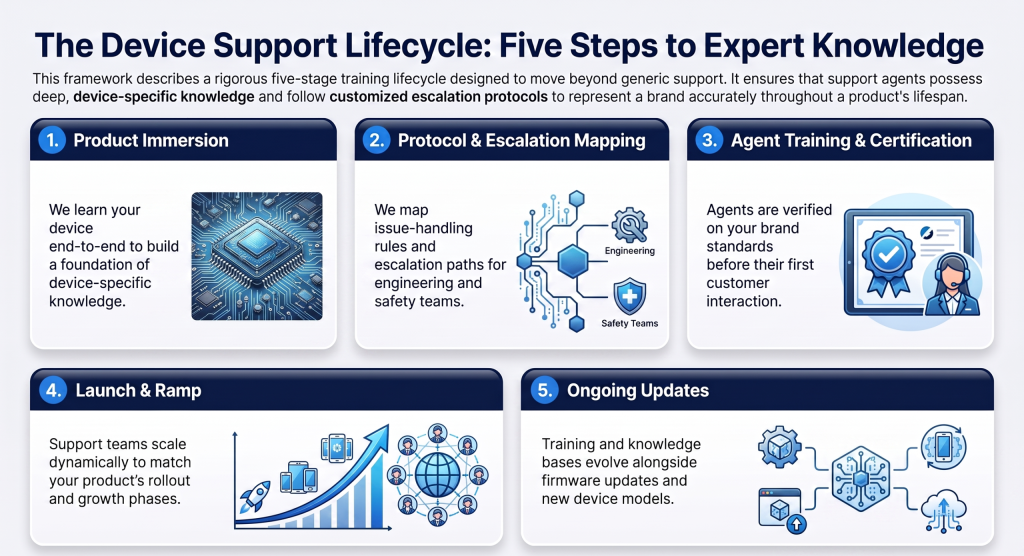
Before a single call is answered, we build a rigorous, device-specific training program—so your users reach someone who understands your product, not a generic script.
One Voice supports the full range of patient- and provider-facing medical devices and connected health products, tailoring agent training to each device’s setup, common issues, and usage requirements. That includes:
Supporting a device that isn’t listed here? Our training-first approach means we build agent expertise around your specific product—so the category matters less than how well we learn your device.
Supporting a regulated medical device means more than answering questions—it means handling every interaction with accuracy, documentation, and awareness of patient safety. Our teams are trained to operate to your standards and to recognize when something needs to go beyond the support desk.
Every hour your engineers and clinical staff spend answering support calls is an hour they’re not improving your product. One Voice takes the support load off your internal teams with trained agents who represent your device—and your brand—well.
We provide technical support and usage guidance—device setup and onboarding, troubleshooting, product inquiries, and multichannel communication—for both the patients using your device and the providers deploying it. Our agents are trained specifically on your product and protocols.
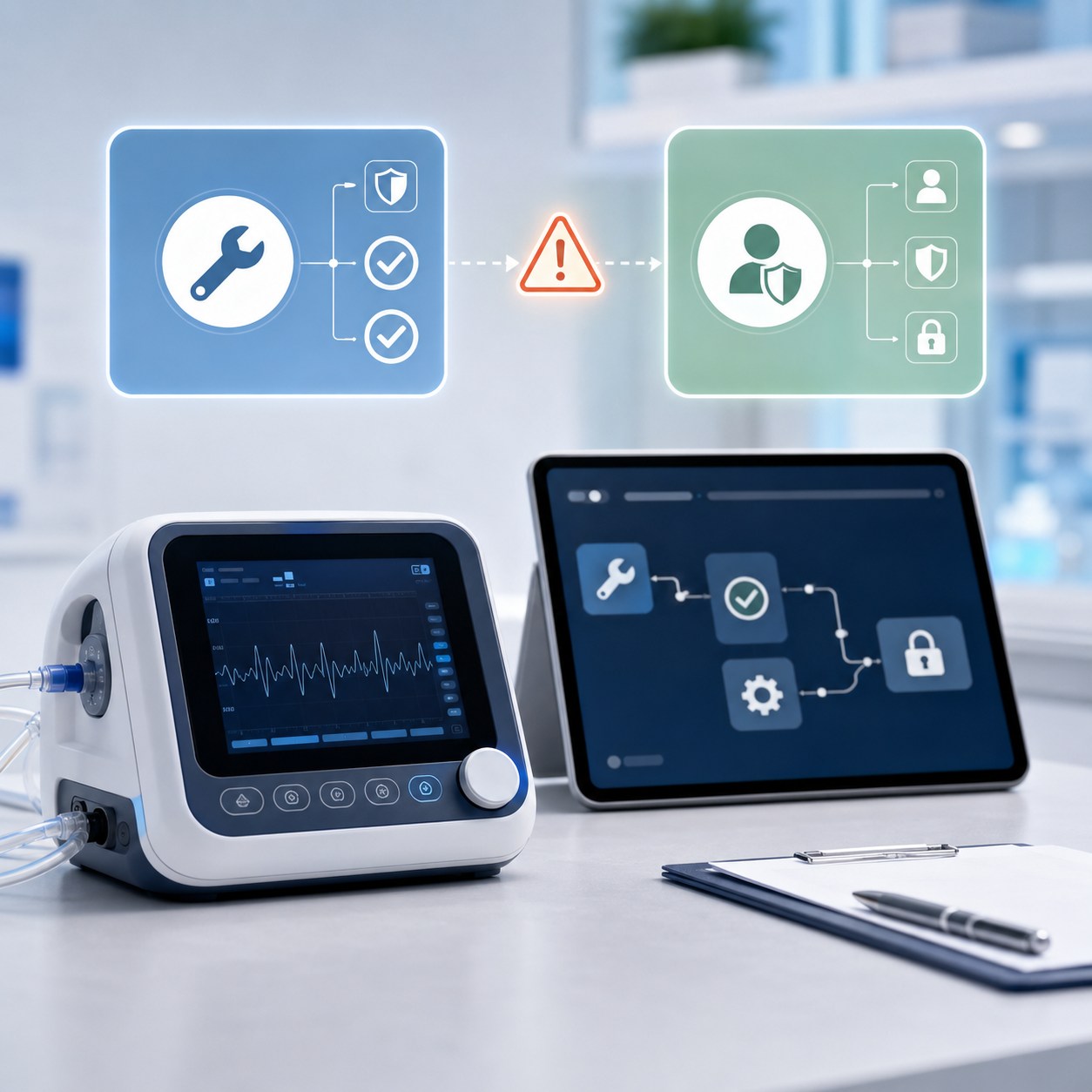
Our agents are trained to recognize potential adverse events and safety signals and escalate them immediately to your quality and regulatory teams, following your procedures. We serve as an informed front line that feeds your complaint-handling process—so nothing that matters gets missed—while formal reporting stays within your quality system. We’ve written about why device support isn’t help desk support and what the QMSR changed for complaint records.
We build a training program around your product—setup, common issues, error states, correct usage, and your escalation rules—so agents support your device knowledgeably rather than reading from a generic script. Training is kept current as your product evolves.
Phone, email, chat, and SMS—so patients, caregivers, and providers can reach support however they prefer, with consistent quality across every channel.
Yes. We train agents to communicate appropriately with each audience—plain-language, patient guidance for patients and caregivers, and technical, workflow-aware support for clinicians and staff.
Yes. We handle all patient information under strict HIPAA compliance, with secure data handling, controlled access, and documented interactions.
Practical guides on complaint handling, recalls and device support lines.

The QSR was replaced in February. Complaint records still live in federal regulation; the process moved into ISO 13485. What that means on the phone.

FDA’s recall policy expects firms to reach every consignee, give them a way to respond and follow up. Much of that runs by phone. What a recall line does.

Telehealth companies grow faster than they can hire, and their support line handles patients and product at once. What to ask a contact center partner.

A help desk counts a resolved call as a success. On a device line, a resolved call can still be a complaint. What that changes about support.