

How Dental Practices Should Choose a Contact Center Partner
Dental front desks lose calls every time the waiting room fills. What to ask a contact center partner about recall, overflow and dental insurance.
One Voice provides insurance benefits verification for hospitals, medical offices, and specialty practices that lose time and revenue to coverage surprises, denied claims, and unexpected patient balances. Our teams confirm active coverage, plan details, and patient financial responsibility before care is delivered—so your front office starts every visit with accurate information and your billing team submits cleaner claims.
Eligibility errors are one of the most common and preventable causes of claim denials. When coverage isn’t verified up front, claims get rejected, patients get bills they didn’t expect, and staff spend hours reworking what could have been caught in seconds. One Voice takes that work off your team—verifying benefits accurately, consistently, and ahead of time.
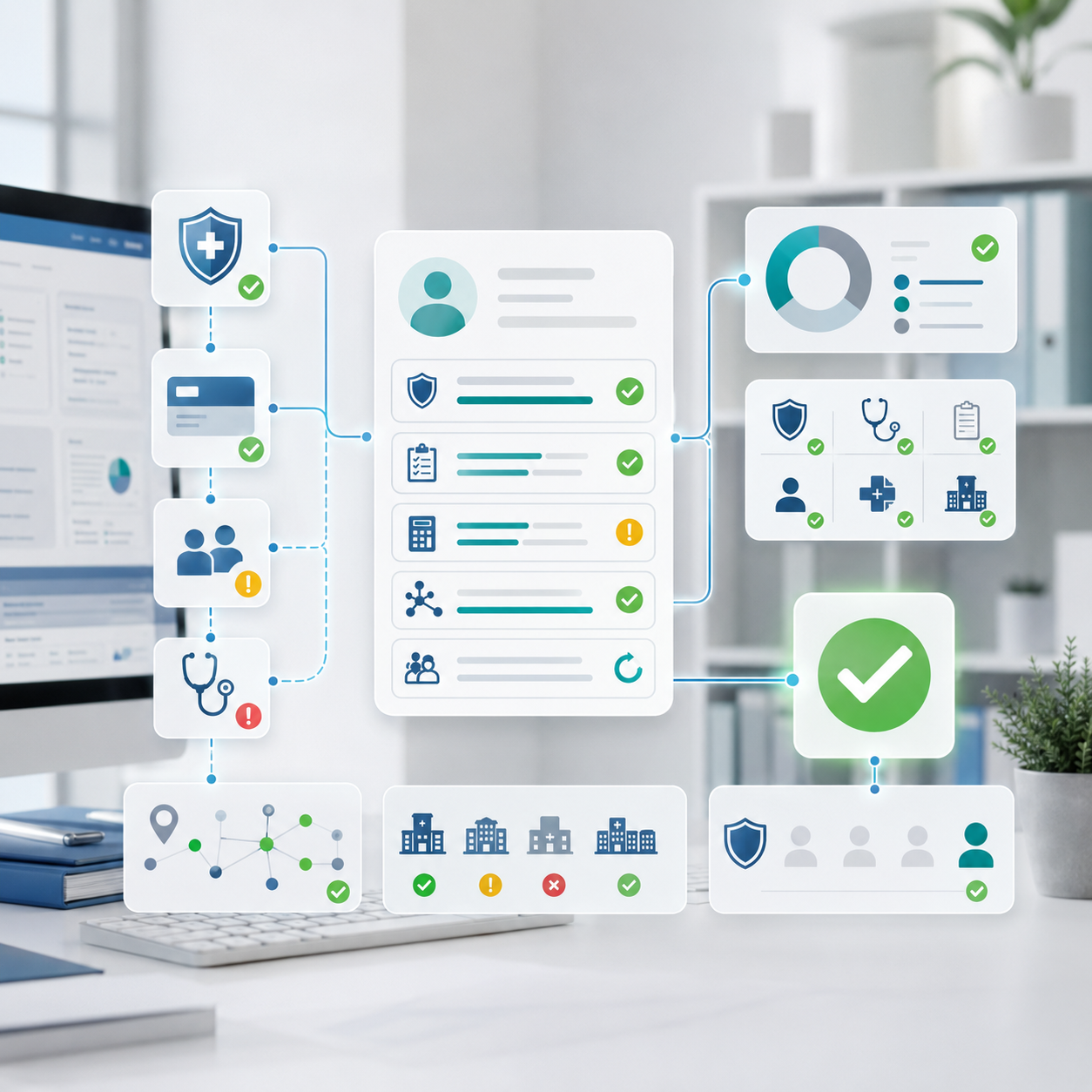
Insurance benefits verification isn’t just confirming a patient has insurance—it’s knowing exactly what their plan covers, what they’ll owe, and what the payer requires before care is delivered. Done right, it prevents denials, speeds up registration, and lets you collect accurately at the point of service.
One Voice brings together experienced healthcare operators and verification specialists who work inside your existing systems, confirm coverage and benefits against each payer’s data, and flag issues—inactive coverage, out-of-network status, missing referrals—before they become denied claims or surprised patients.
Verification is the first checkpoint in the revenue cycle, and errors here cascade into everything downstream—denials, delayed payments, rework, and patient dissatisfaction. Coverage can change between scheduling and the day of service, plans have complex benefit structures, and payer rules shift constantly. Handling it accurately and at volume is hard to sustain in-house without pulling staff away from patients.
One Voice provides the trained teams and structured workflows to verify benefits at every point they matter—at scheduling, before the visit, and on the day of service—so the information is always current when it counts.
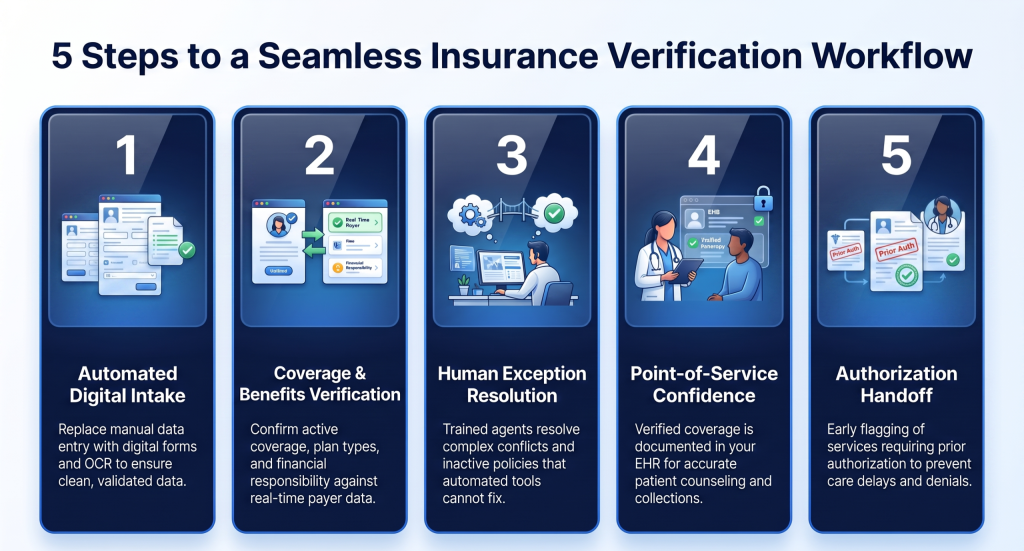
From automated intake to human exception resolution, our verification workflow closes the gaps—between systems, between payer and patient, and between eligibility and authorization—that turn into denied claims.
A complete verification is more than a yes/no on coverage. For every patient, we confirm the details that determine whether a claim gets paid and what the patient owes:
Whether the plan is in force on the date of service
In- or out-of-network for the provider and service
How close the patient is to their annual limit
Correct primary/secondary payer order for patients with multiple plans
The exact window the policy is valid
The patient's cost-sharing and how much of the deductible remains
Visit caps, non-covered services, and benefit restrictions
What the payer requires before the service is rendered
Accurate verification starts long before the payer inquiry goes out—it starts at intake. Most eligibility denials trace back to bad data captured at the front desk: a mistyped member ID, a missing group number, an outdated plan. If the information going in is wrong, no verification tool can fix what comes out.
That’s why One Voice works both ends of the problem—automating the front-end intake that feeds verification and running the eligibility checks themselves, so the whole chain starts from accurate data. We run verification two ways:
Verification that runs continuously across your revenue cycle—and it starts at the front end. We streamline intake with automated digital pre-registration, insurance and ID capture, and clean, structured data written straight into your EHR or practice management system, then trigger eligibility checks automatically at scheduling, before the visit, and on the day of service—so verification starts from accurate information instead of a transcription error, and coverage changes are caught before they become denials.
Underneath both is what really sets us apart: a trained team, not just software. Our agents reach patients across phone, text, and email to capture and correct missing details, make sure verified information lands where it belongs, and work payers directly to resolve the exceptions automation can’t. Automation handles the volume; our people handle the judgment—so you’re covered from the first data point to the final confirmation.
Coverage confirmed the instant you need it—active coverage, copay, deductible, and network status returned right away, so your front desk can register, counsel on cost, and collect without the wait.

Eligibility verification confirms that a patient has active coverage and what their plan includes. Prior authorization secures payer approval for specific treatments. Both are essential, and a gap in either leads to denials. One Voice handles both—so coverage confirmation flows straight into authorization when a service requires it, with no handoff lost between them.
→ Explore our Prior Authorization Solutions

In verification, small errors cause big problems downstream—a wrong plan, an undocumented check, or a missed coverage change turns into a denied claim weeks later. We build accuracy and compliance into the process from intake forward, so the information you act on is correct, current, and defensible.
Every unverified visit is a denial waiting to happen and a patient balance no one expected. One Voice verifies insurance benefits accurately and ahead of time—so claims get paid, collections improve, and your staff stops reworking preventable mistakes.
They’re related but not identical. Eligibility confirms a patient has active coverage on the date of service; benefits verification details what that plan actually covers—copays, deductibles, coinsurance, network status, limits, and authorization requirements. A complete check does both, which is what we deliver on every verification.
Automation handles the clean, straightforward checks well—and we use it. But the cases that actually cause denials rarely are straightforward: inactive coverage, coordination-of-benefits conflicts, wrong payer order, or payer portals that fail or return incomplete data. Those need a trained person to work the payer and patient directly. One Voice pairs automation for volume with a human team for the exceptions—so nothing gets left unresolved.
Most vendors are either pure software (the payer check only) or pure offshore staffing. We do both, and we start earlier—automating the front-end intake that feeds verification so checks run on clean data instead of a mistyped member ID. We own the whole chain: intake, verification, and exception resolution.
Ideally more than once—at scheduling, again before the visit, and on the day of service—because coverage can change in between. Our automated workflows verify at each point that matters, so the information is current when the patient arrives, not just when they booked.
Eligibility errors are among the most common causes of denials, and most trace back to bad data captured at the front desk or coverage changes caught too late. By capturing clean intake data, confirming coverage and benefits against current payer data, and resolving discrepancies before the claim goes out, we catch the issues that would otherwise surface as rejections weeks later.
Real-time verification confirms a specific patient’s coverage instantly, the moment you need an answer. Automated verification systematizes checks across your revenue cycle so they run consistently and at volume without manual work. Most organizations benefit from both, and our programs use them together.
Yes. One Voice works within your existing EHR, EMR, practice management, and scheduling systems rather than forcing a platform change or duplicate data entry—verified data is written straight into the system your team already uses.
Practical guides on eligibility, benefits and what verification really costs.
Dental front desks lose calls every time the waiting room fills. What to ask a contact center partner about recall, overflow and dental insurance.

Intake errors don’t show up on the call. They show up weeks later as denials and duplicate charts. Where they start, and how to find yours.

Most eligibility checks are electronic and cost about $2. The ones that need a portal or a phone call cost far more, and the bill lands on the provider.

Three different questions, routinely treated as one job. Here’s what each actually answers, why two of them blur, and what changed in January.